COMPANY
Mosey
DATE
2 Weekly Sprints
ROLE
Founding Product Designer
DATE
Q3, 2023
OVERVIEW
Nothing kills velocity at a growing SaaS startup faster than the inability to scale. A raw admin panel built on tribal knowledge, did the trick at Mosey
The Challenge
Mosey is an HRTech SaaS provider that automates state and local compliance for businesses operating across all 50 states.
Their DevOps team needed to onboard 50 automation engineers in two waves of 25 with zero one-on-one training to execute thousands of business compliance requirements across hundreds of municipalities in all 53 states.
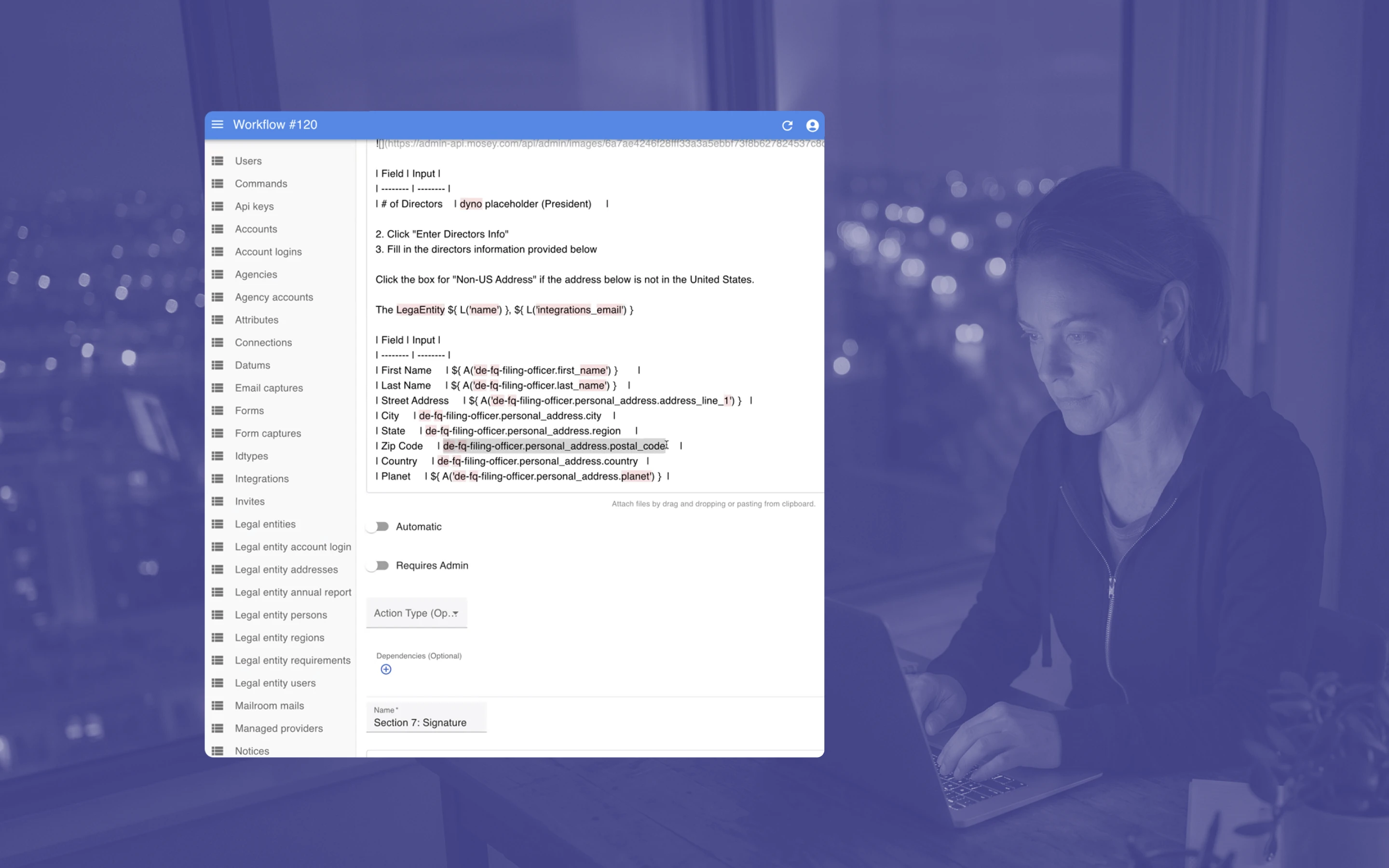
The existing tool was a raw admin panel running on localhost. It exposed database entities as navigation, used markdown with template variables for instructions, and required tribal knowledge held by three engineers.
Key Friction Points
Exposed Data as a UI: Raw admin panel on localhost. Database entities surfaced directly as navigation. No information architecture.
Markdown + Code: Step instructions written in markdown with template variables. Required engineering context to interpret.
No State Visibility: No progress tracking, no completion indicators, no way to see where you left off or what was blocked.
Tribal Knowledge Required: Every action required context only held in the heads of 3 engineers. Impossible to scale past that team.
Solution
The Solution
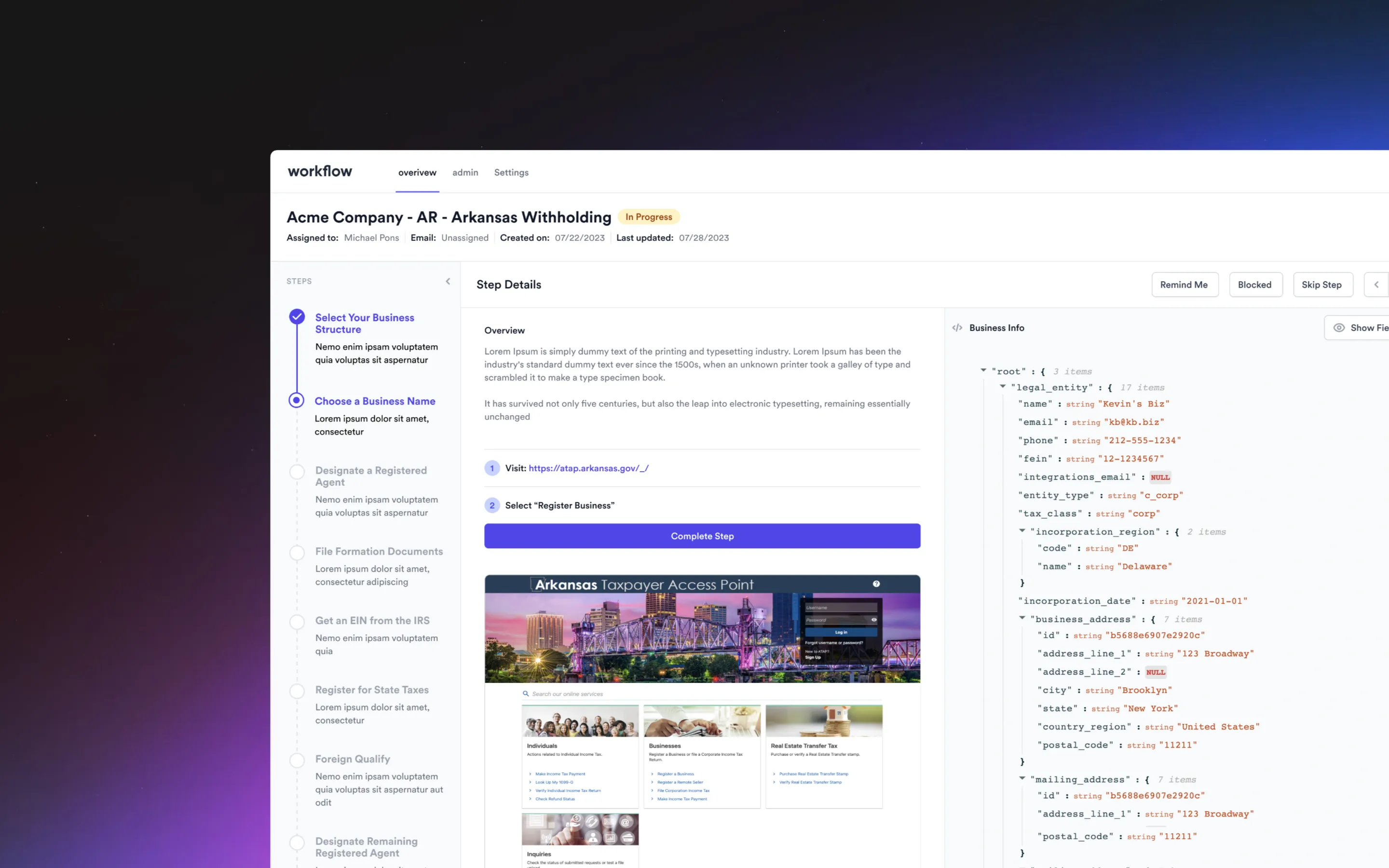
Mosey's automation work breaks down into three jobs: know where you are in the compliance process, execute or escalate every requirement, and verify the data before it ships. The existing tool forced all three into a single undifferentiated surface. The Database entities were being passed as UI, no guided flow and no separation of concerns. We we took those same three jobs and evaluated their core workflows to create three purpose-built zones within a single screen.
Engineers could navigate, decide, and validate without context-switching, without tribal knowledge, and without leaving the workflow. Every step resolves one of two ways: the engineer completes the automation, or flags it
Opportunity Areas:
Exposed Data as a UI: Engineers need to orient themselves across thousands of requirements spanning all 53 states. This zone mirrors Mosey's customer-facing step sequence putting the compliance journey in lockstep with a source of truth we could rely on.
Navigate + Audit: Step instructions written in markdown with template variables. Required engineering context to interpret.
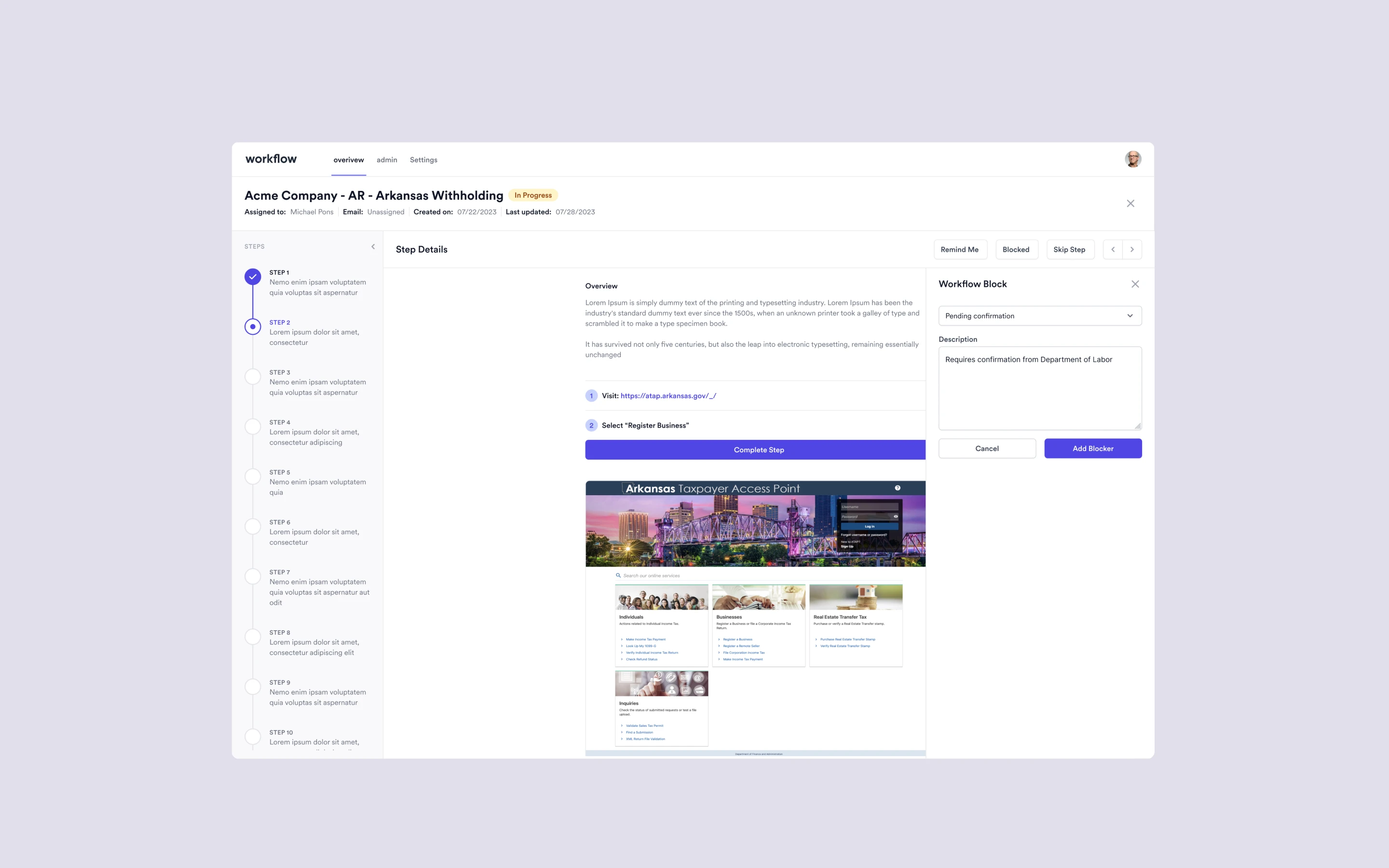
Automate or Triage: Every requirement resolves one of two ways: automate it, or flag it for triage with structured context. No ambiguity, no Slack threads. The system forces a clear decision at every step.
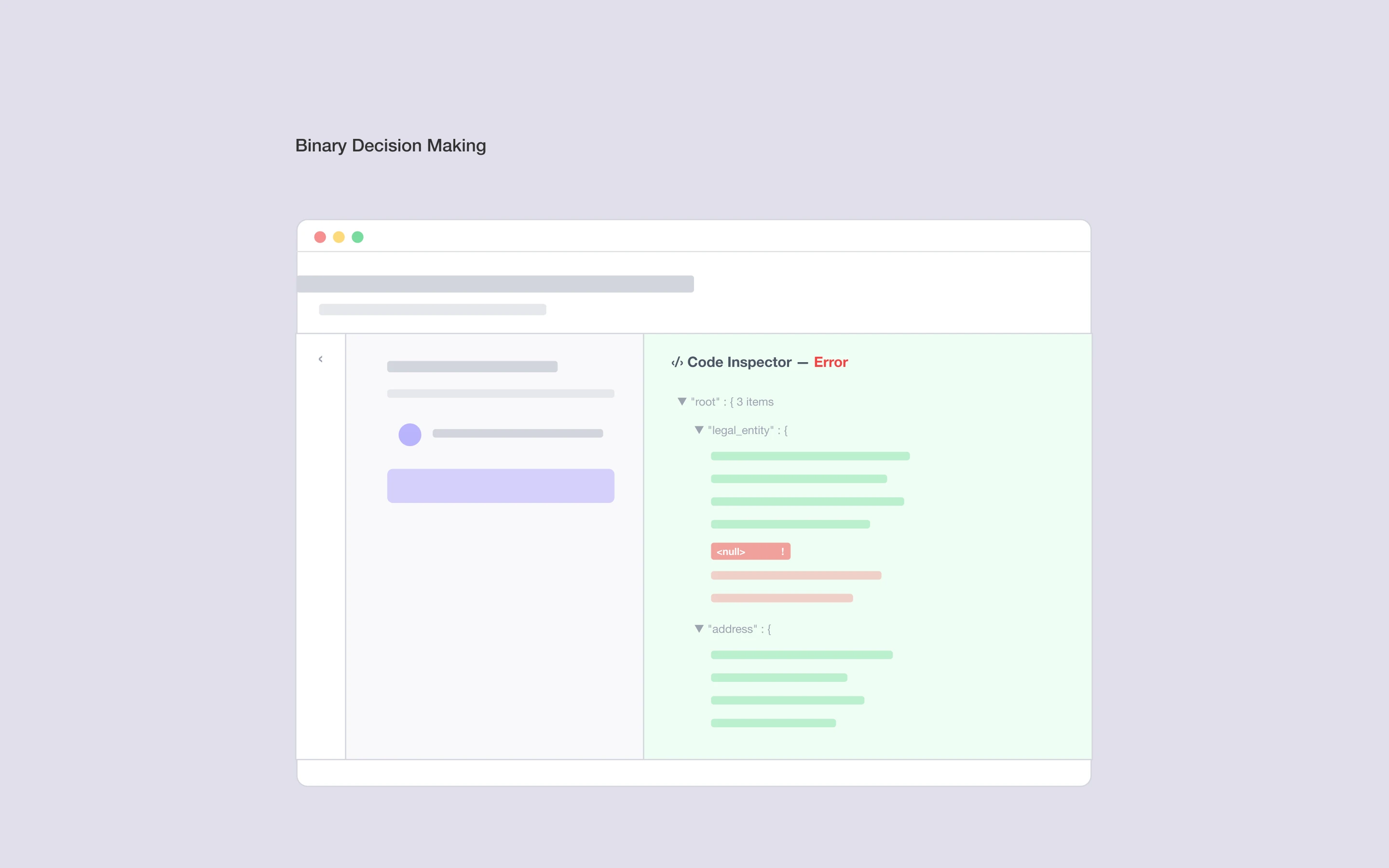
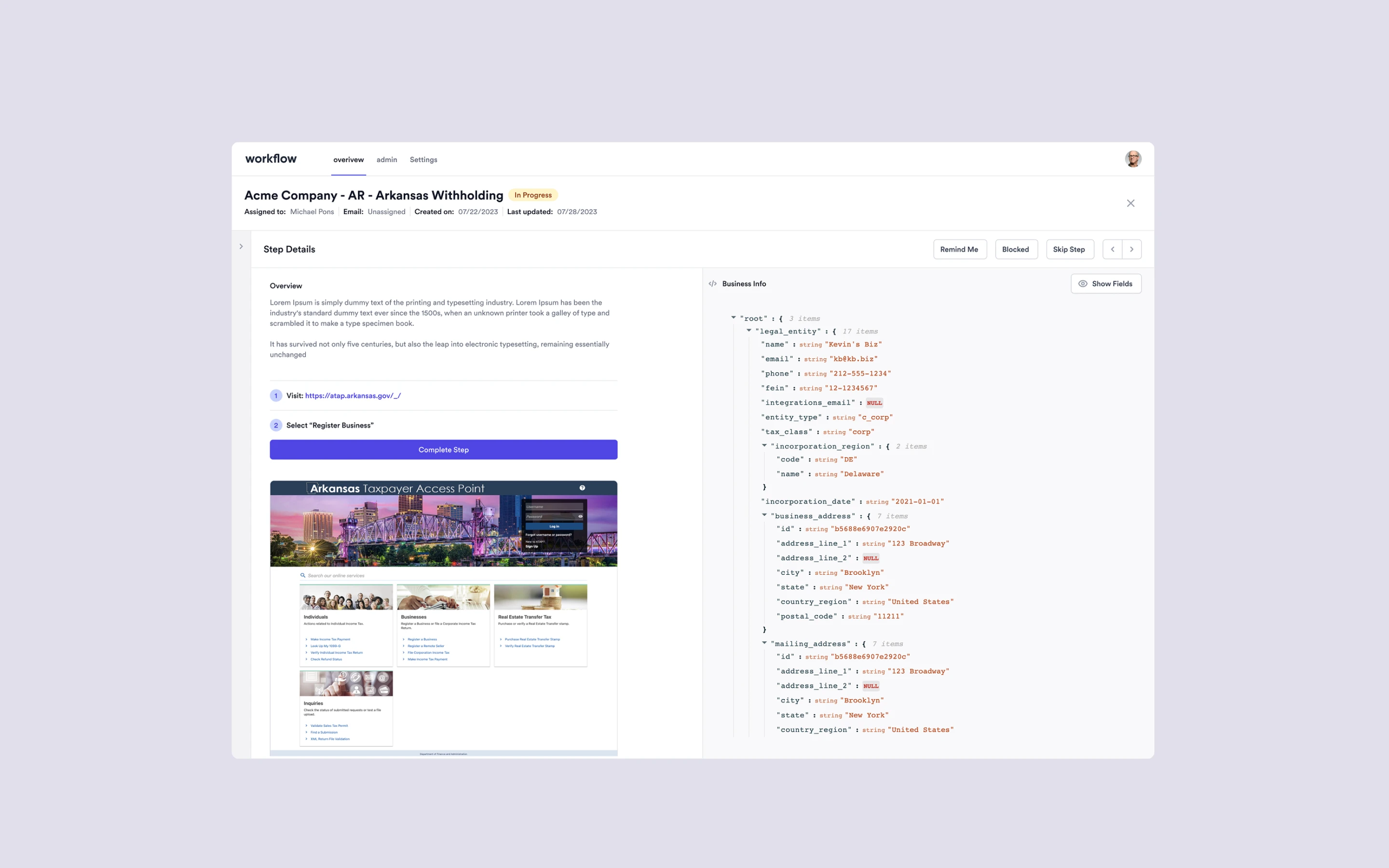
Validate or Flag: Business entity data, template variables, and configuration values surfaced inline. NULL values flagged red. Engineers and QA verify automations resolve correctly before they go live.
RESEARCH
What we already knew
This project didn't start with a formal discovery phase. After 2+ years as Mosey's sole designer, I had accumulated the context most projects spend weeks gathering. I'd watched operations struggle with the admin panel daily.
I'd seen customer success work around the same limitations. I'd sat in the meetings where scaling was discussed and tooling was always the bottleneck. Stakeholders couldn't articulate the ask.
We synthesized the brief from direct observation of what was breaking and where the team was compensating.
Common Themes
One Daunting Deadline: Engineers needed to execute compliance tasks across all 53 states from day one.
Common Friction: Operations and customer success hit the same friction points despite different responsibilities.
Institutional Knowledge: The existing admin tool required engineering-level context to operate. That doesn't scale.
Bad UX Doesn’t Scale: Adding headcount was not viable until the tooling itself was optimized.
Analysis
Common Pains, 1 Solution
Operations and customer success hit the same friction points despite different responsibilities. Mapping their workflows side by side revealed identical breakdowns. Both teams relied on the same tribal knowledge, the same workarounds, and the same Slack channels to get work done. Two completely separate teams, with different goals and different daily routines, were both bottlenecked by the same tool limitations and the same single engineer who held all the institutional context.
We synthesized the brief from direct observation of what was breaking and where the team was compensating.
Common Themes
Operations Workflow: Automation execution, triage routing, and engineer onboarding. Every path required tribal knowledge at the decision points.
Customer Success Workflow: Coverage verification, customer escalation handling, and compliance accuracy checks. Same.
Mapping The Jobs
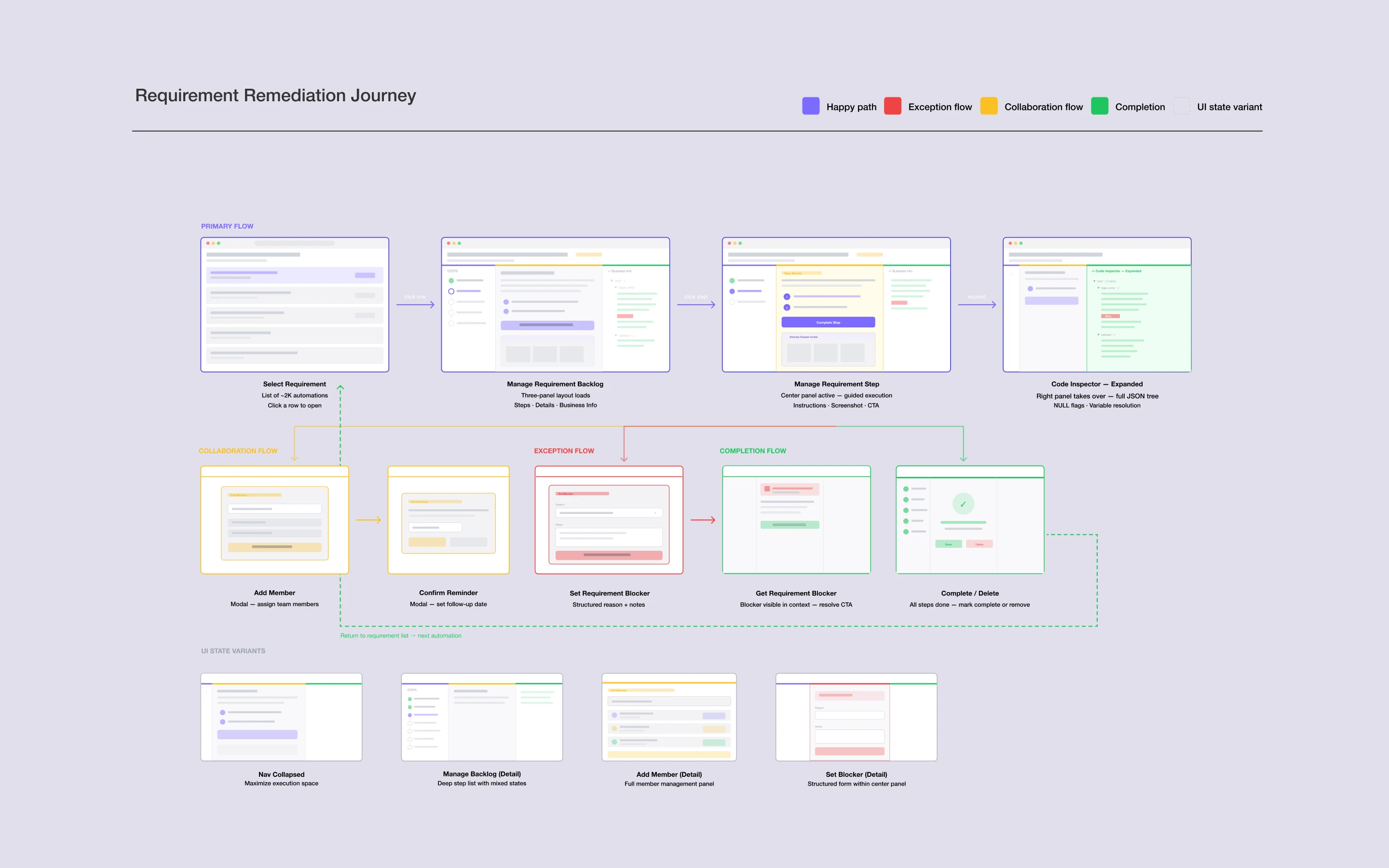
Each zone maps directly to one of the three core jobs an automation engineer performs. The layout was designed to follow the JTBD framework with deliberate UI patterns designed to help navigate, execute, validate. Each zone eliminates a specific dependency on tribal knowledge: the navigation zone replaces institutional memory of step sequences, the execution zone replaces Slack-based decision-making, and the validation zone replaces manual data lookups in the database.
The Happy Path
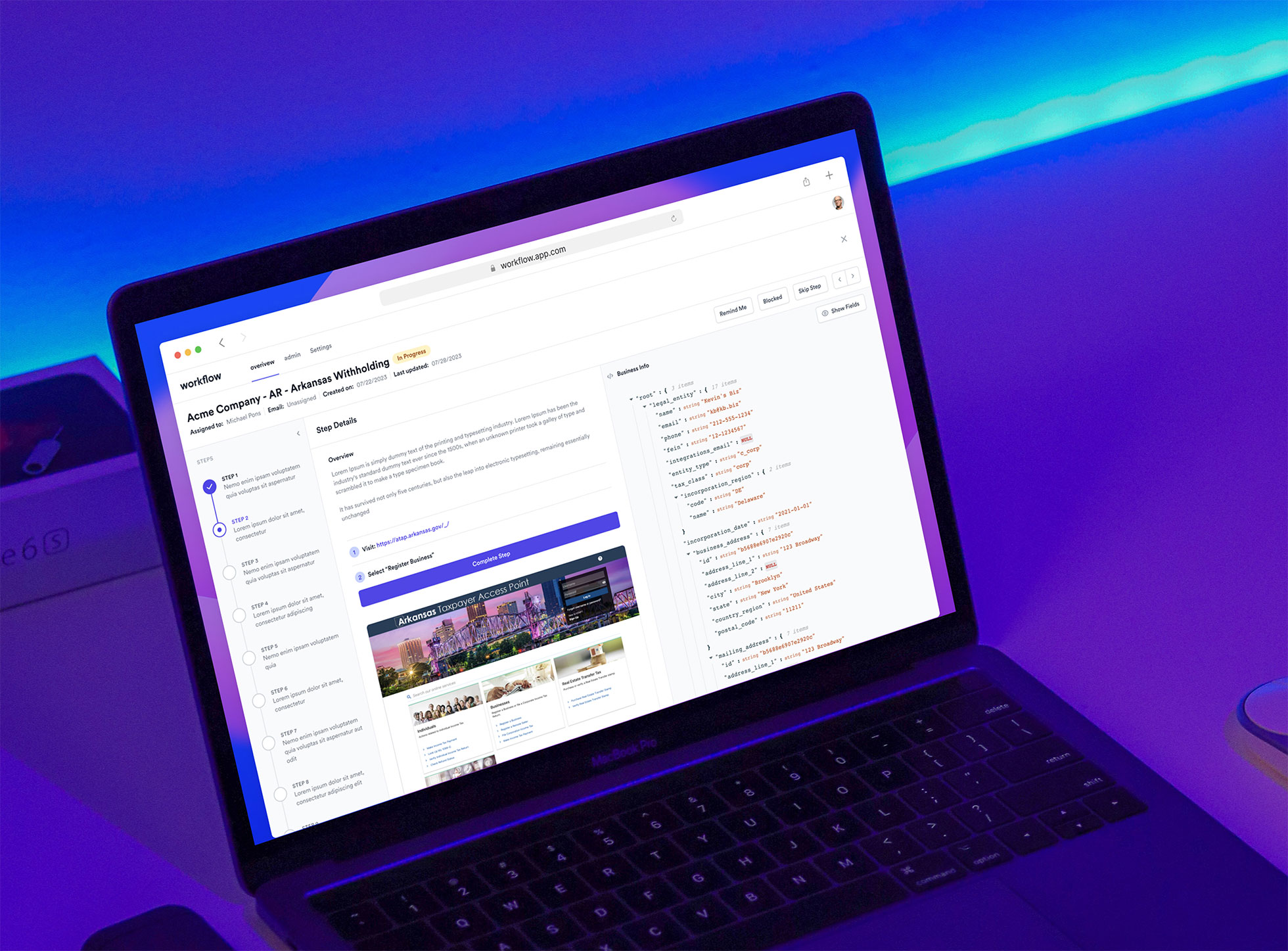
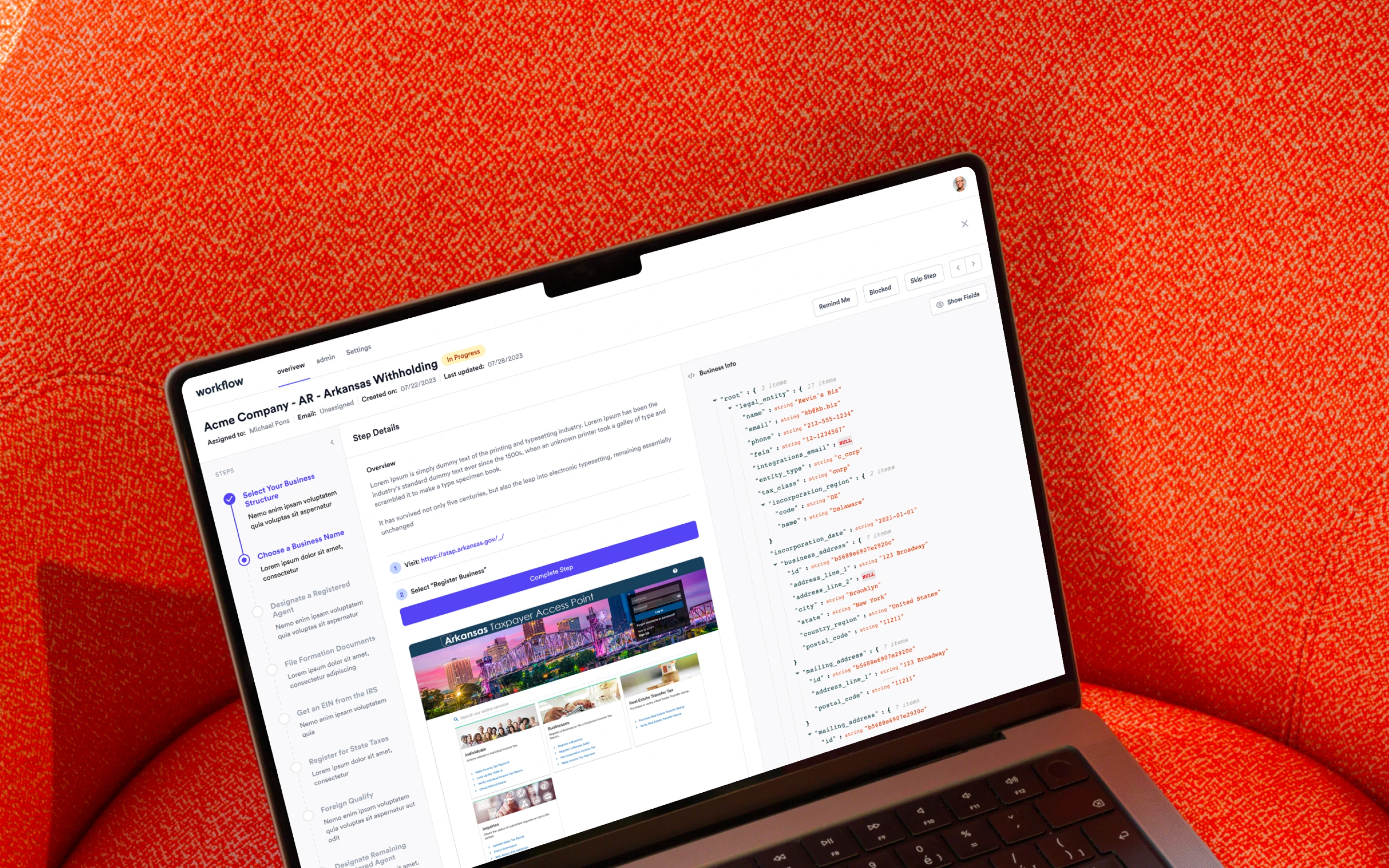
This is the core execution surface — the screen engineers live in for every compliance requirement across every state. The three-zone layout maps directly to the JTBD framework: Orient yourself in the compliance journey, make a clear decision on each step, and verify the data is correct before anything ships. Everything an engineer needs to execute, escalate, or validate is visible without navigating away.
Iterations
Framing the Design Challenges
The analysis pointed to a single root cause: Mosey's internal tooling couldn't keep pace with the product's external promise. These four questions reframed the problem from “fix the admin panel” to “build the operational infrastructure for scale.” Each HMW maps directly to one of the insights from the analysis. The tribal knowledge dependency, the gap between external automation promise and internal manual process, state-by-state complexity, and the inverse relationship between growth and operational speed.
How Might We
The analysis pointed to a single root cause: Mosey's internal tooling couldn't keep pace with the product's external promise. These four questions reframed the problem from “fix the admin panel” to “build the operational infrastructure for scale.”
Each HMW maps directly to one of the insights from the analysis. The tribal knowledge dependency, the gap between external automation promise and internal manual process, state-by-state complexity, and the inverse relationship between growth and operational speed.
How might we eliminate tribal knowledge dependencies so scaling doesn't require institutional context?
How might we build internal tooling that lives up to the same automation promise Mosey sells to its customers?
How might we make state-by-state complexity invisible to the engineer executing the work?
How might we create a system that gets faster as Mosey grows or compliance evolves?
01
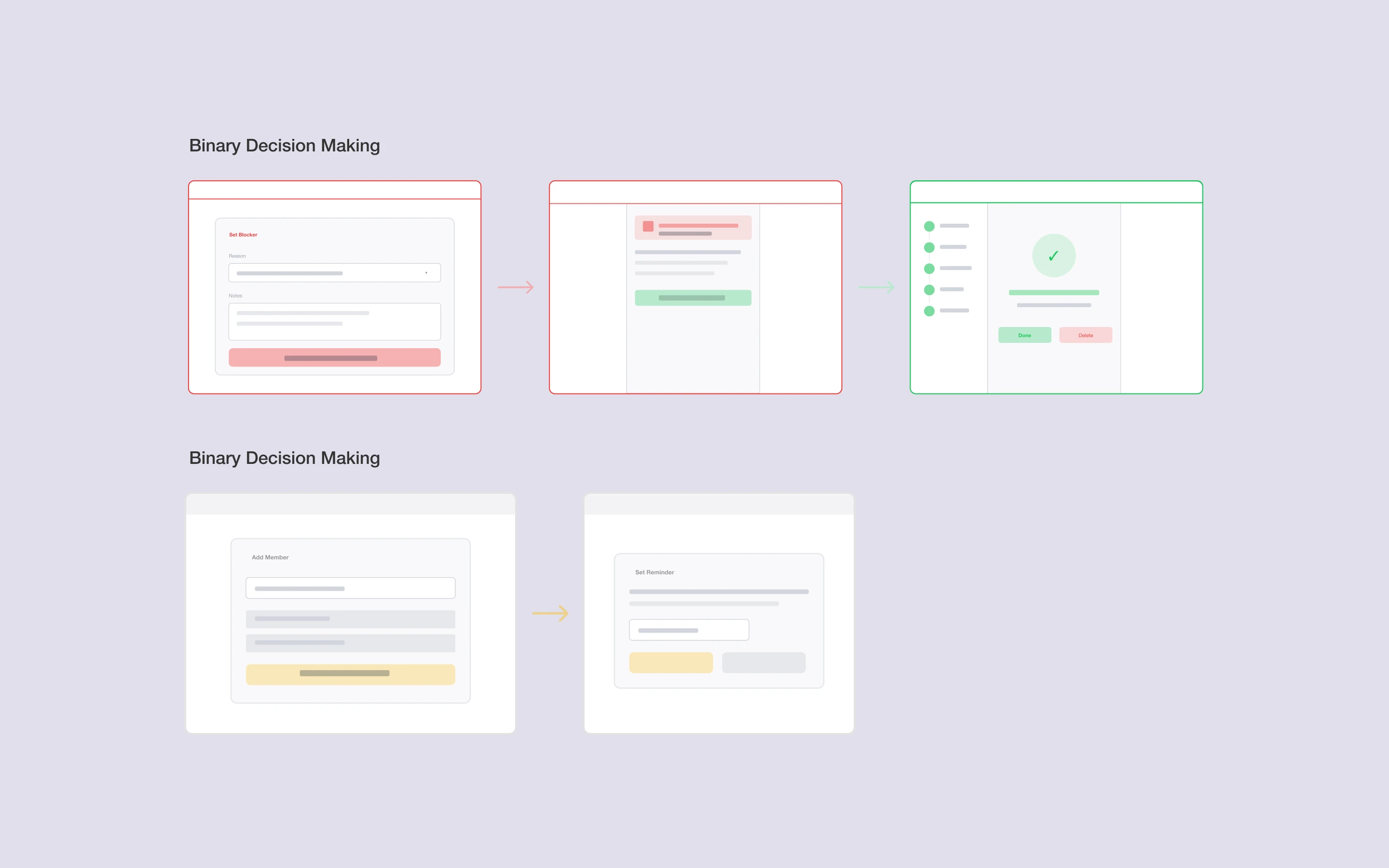
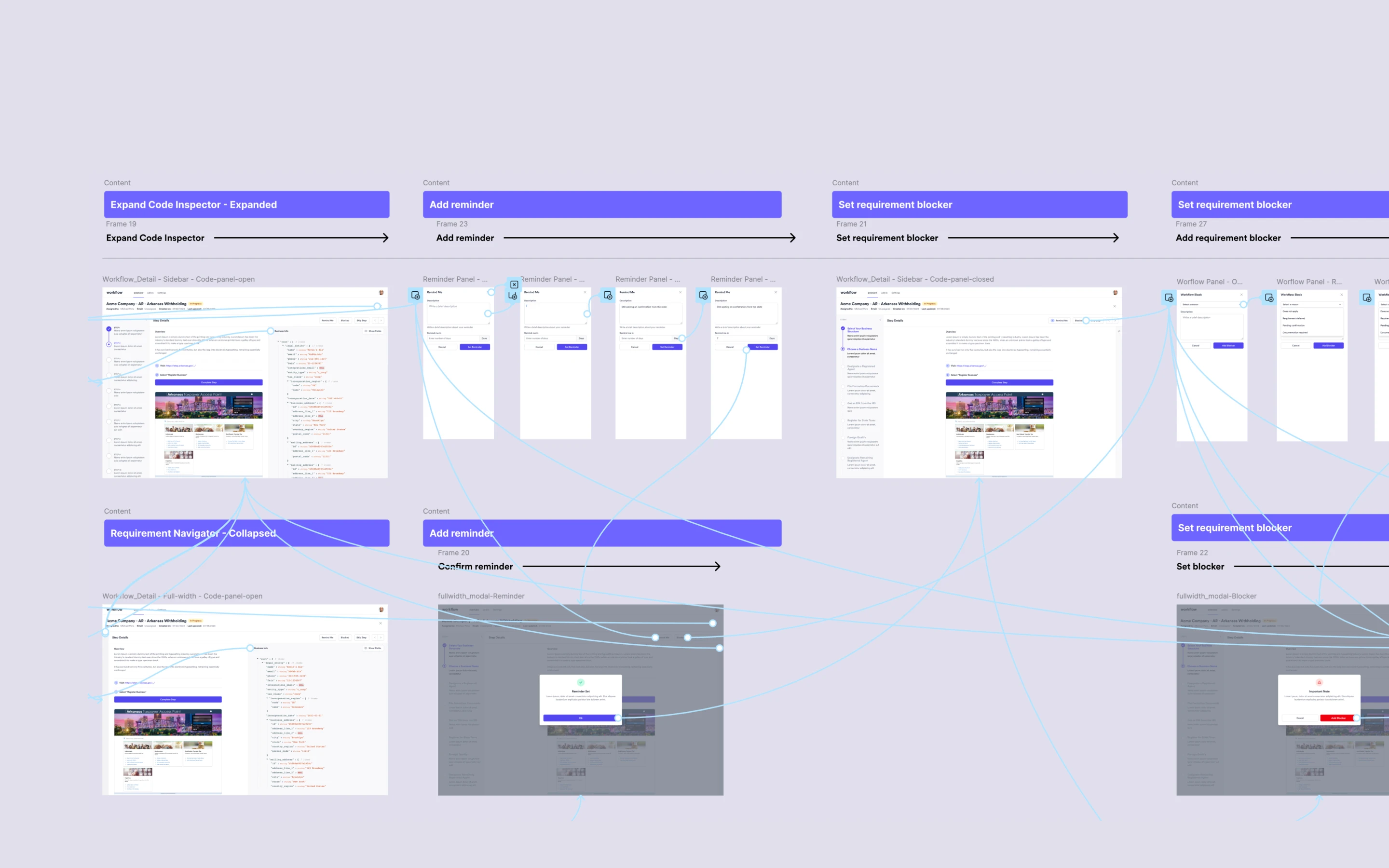
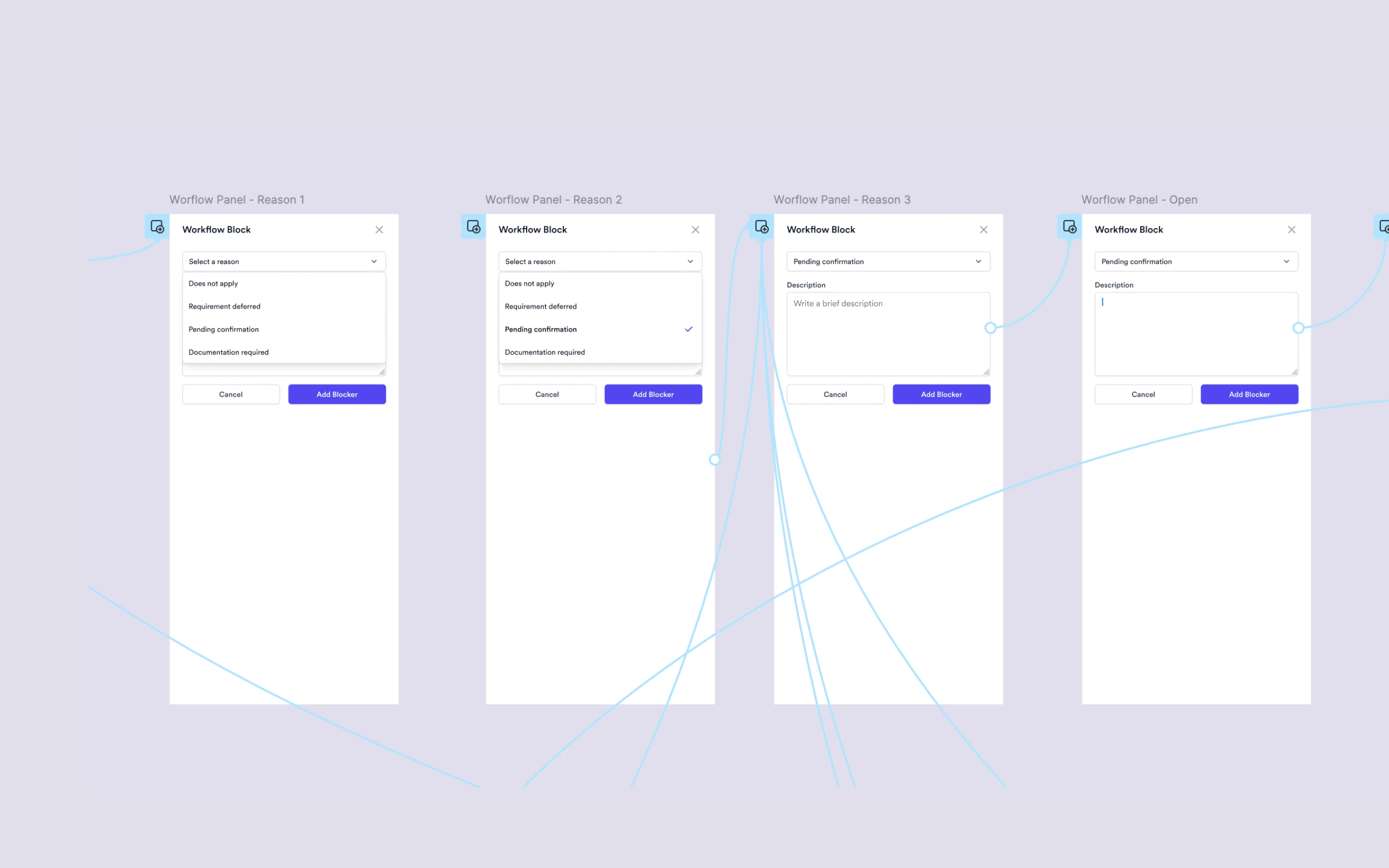
Binary Decision Making
Every step resolves one of two ways: the engineer completes the automation, or flags it with structured context for triage. No ambiguity, no Slack DMs asking what to do.
02
Proactive Automation
Not every requirement applies to every state. The platform dynamically removes irrelevant work based on state and entity type, so engineers only see what actually matters.
03
Non-negotiables Guardrails
The validation zone exposes raw data (business entity info, template variables, configuration values) so engineers can confidently verify automations resolve correctly before they ship.
Final DEsigns
Shipped and Demo-Ready in Four Sprints
The Final Sprint
Production-ready by end of week 4. Deployed to the first wave of 25 engineers with zero training sessions. The tool's success was validated when Mosey doubled the team to 50 without a single onboarding change.
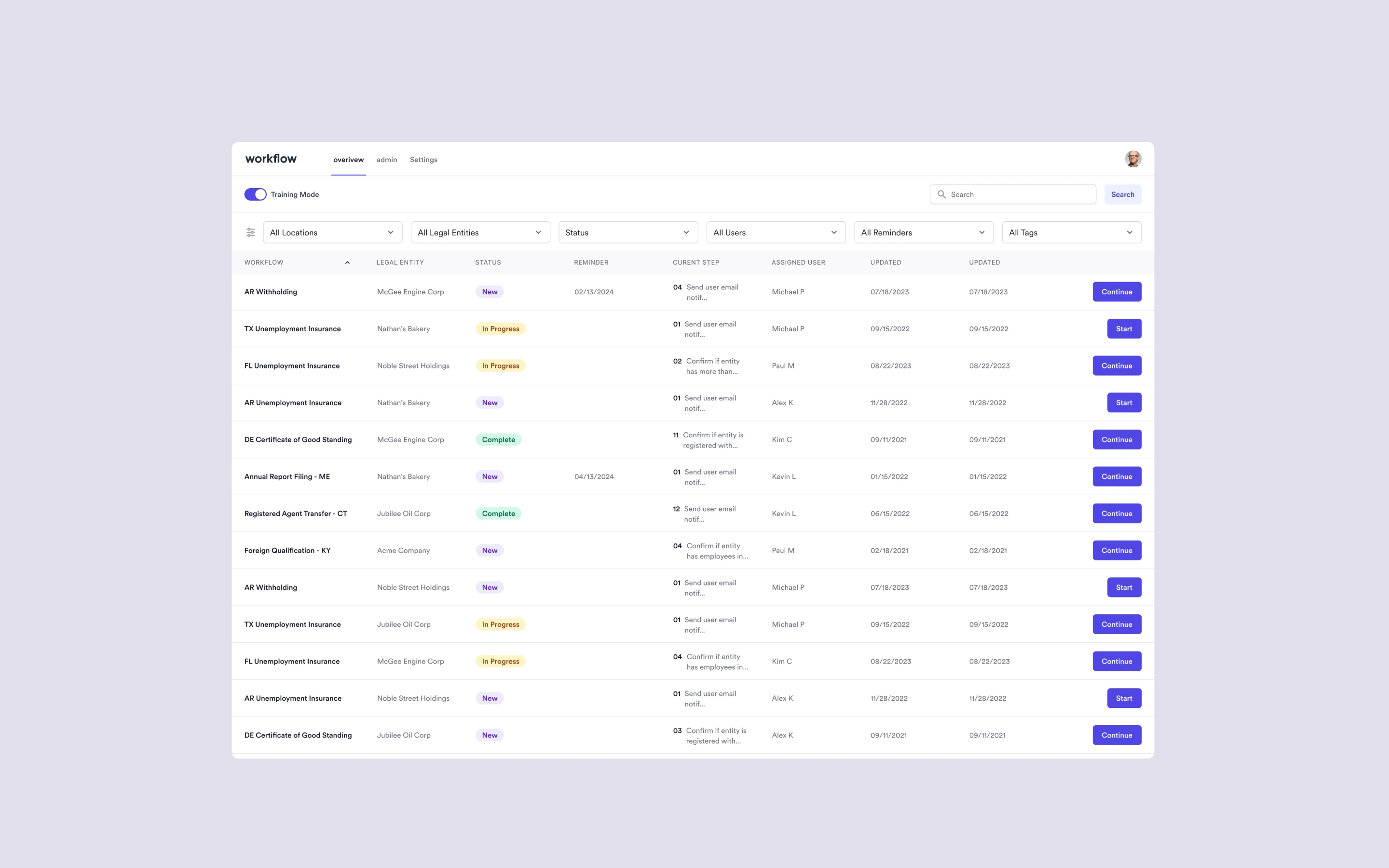
The shipped product: the overview table that lets engineers audit the full compliance portfolio at a glance, and the three-zone execution view where they spend 75% of their time navigating, deciding, and verifying.
We delivered an MVP platform that helped Mosey go from tangled workflows to a streamlined automation experience, in just 4 weeks.
Advanced Filtering: Users can filter requirements by the entity, stage, or other criteria for easier navigation.
Contextual Information: Each requirement displays details about its current step, process, and completion status.
Step-by-Step Interface: The interface guides users through each stage of the requirement, with the current step always visible.
Rich Code Editor:Edit requirement to add more context details using various formats like text, images, and links.
Task-Oriented Design: Access to requirement details, code inspections, and reminders for efficient multitasking.
Integrated Reminders: Users can set email reminders for specific requirements with customizable timeframes.
Step Blocking: Users can block specific steps in the workflow with justifications and reminders.
Dynamic Status Updates: Requirement status can now automatically update based on a flagged status.
IMPACT Delivered
The Numbers That Truly Mattered
The redesign didn't just improve our tooling stack, it fundamentally removed friction from automating workflows, enabling teams to operate at scale. Mosey doubled its DevOps engineering team from 5 to 50 in a single wave, zero training required, because the tool handled onboarding by design.
Engineers spend 75% of their time in the execution view. Not because we told them to. Because the product matched how the work actually flows across 10,000+ compliance requirements, 53 states, and 1,000+ localities. $18MM Series A closed three quarters later.
in April 2026, Gusto acquired Mosey. The compliance infrastructure we built together was central to what made the product worth acquiring.
1000+
Compliance requirements mapped across 53 states and 1,000+ local municipalities.
$18M
Scaling coverage and keeping pace with new requirements was integral to this growth.
50+
Automation engineers successfully onboarded for a 6-month spike with 0 training sessions.